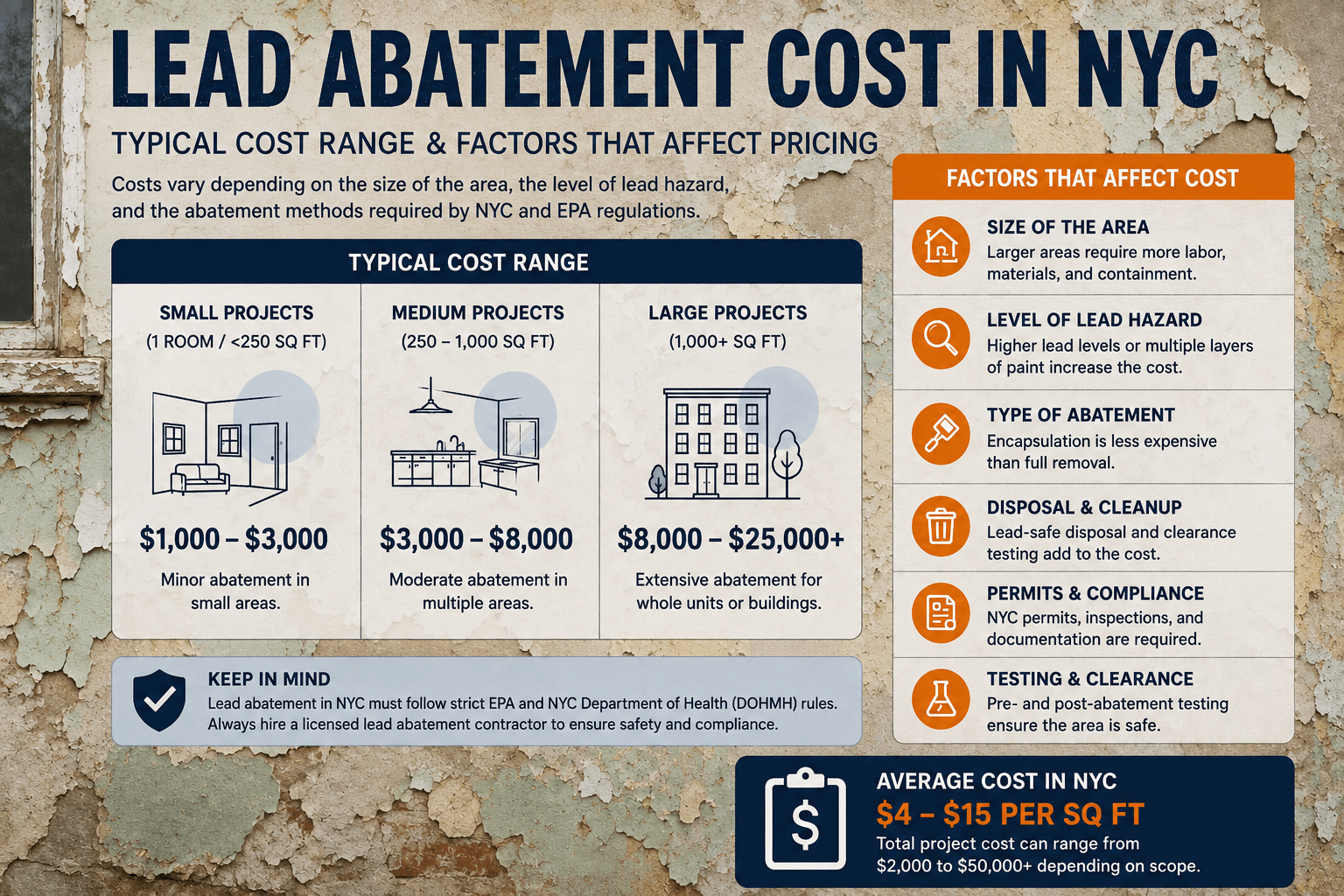
Lead abatement is a specialized service designed to safely remove, contain, or reduce lead-based hazards in homes, schools, and commercial buildings. While every project is different, most lead abatement pricing comes down to a set of common factors that contractors evaluate before giving an estimate.
Here are the main things that typically affect lead abatement costs.
1) The Size and Scope of the Work
The overall area being treated (for example, number of rooms or square footage) directly impacts labor, materials, and disposal costs. Larger projects generally cost more because they require more containment, protective gear, and cleanup time.
2) Type of Abatement Needed
Not all lead hazards require the same approach. Common methods include:
- Encapsulation (sealing lead-containing materials in place)
- Removal (taking out lead-painted components)
- Replacement (removing and swapping affected building elements)
- Enclosures/containment for dust control
Removal is usually more expensive than encapsulation because it involves stricter procedures, more intensive cleanup, and disposal requirements.
3) Severity and Location of the Lead Hazard
Pricing can increase if lead hazards are widespread or difficult to access. For example, work around windows, doors, stairways, or interior trim may require more detailed prep to avoid spreading dust. If lead is found in hard-to-reach areas, the project can take longer.
4) Surface Condition and Contamination Level
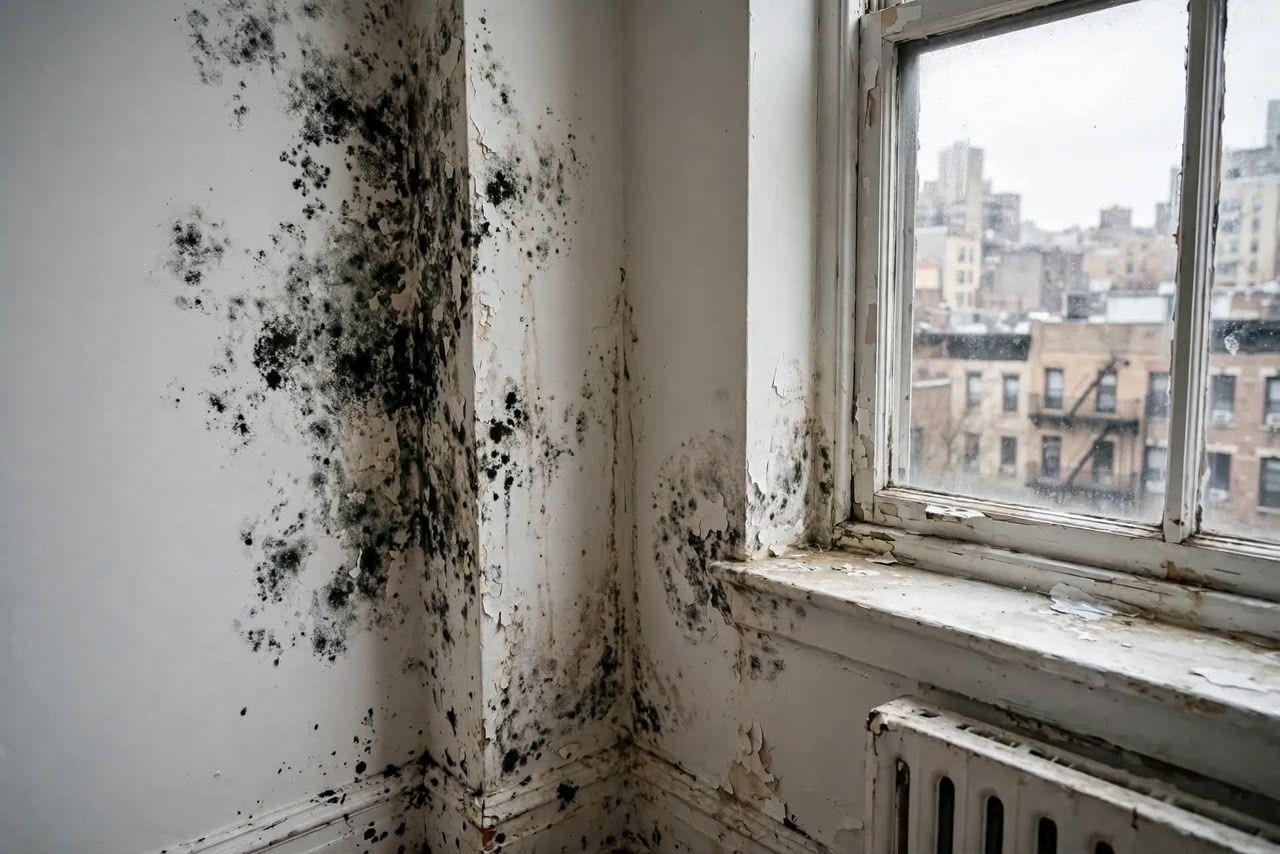
Costs often rise when lead paint is peeling, chalking, or deteriorating—because disturbed paint can generate more contaminated dust. If an area is already heavily affected, contractors may need more containment and more thorough cleaning verification.
5) Containment and Safety Requirements
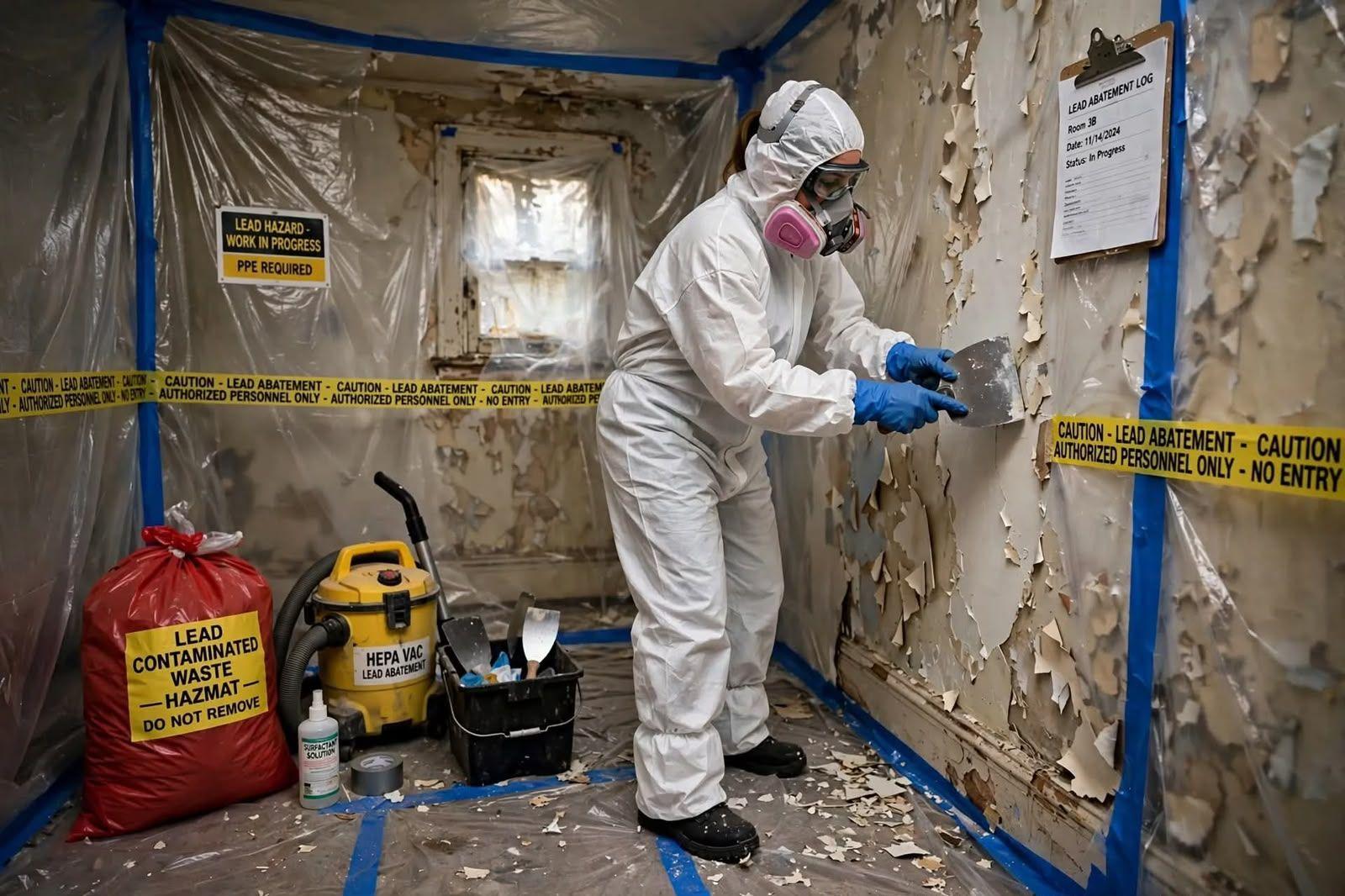
Lead abatement usually involves strict dust control measures such as:
- Work area containment (plastic barriers, sealed openings)
- Negative air pressure setups
- HEPA filtration
- Specialized personal protective equipment (PPE)
These safety steps are essential, but they also influence labor and equipment costs.
6) Testing, Sampling, and Clearance Testing
Many projects include multiple phases of testing:
- Initial inspection/sampling (often to identify where lead exists)
- Clearance testing after work is complete (to confirm levels are safe)
If testing is extensive—or if re-testing is required—costs can increase.
7) Disposal and Waste Handling
Lead-containing debris must be handled as hazardous waste. Disposal fees depend on the volume of material removed, the required packaging/labeling, and local disposal facility rules.
8) Building Type and Jobsite Complexity
A single-family home is often simpler than a multi-unit building, occupied commercial property, or school environment. Challenges like narrow access, occupied spaces, or strict scheduling requirements can raise labor costs.
9) Project Timeline and Scheduling
If abatement is needed quickly—especially outside normal hours—contractors may charge more due to mobilization, additional staffing, or limited availability.
10) Local Regulations and Contractor Overhead
Pricing also reflects:
- Local permitting and compliance requirements
- Labor rates in the area
- Cost of equipment and licensing
- Contractor experience and quality assurance practices
The safest and most compliant work may cost more upfront, but it can help prevent costly delays or the need to redo work.
What This Means for Homeowners and Property Managers
When comparing quotes, it helps to look beyond the final price and ask what’s included. A detailed estimate should cover scope, containment method, testing/clearance, disposal, and cleanup verification.