Gas piping inspections are an important part of building safety in New York City. Under Local Law 152 of 2016, most NYC buildings with gas piping are required to undergo periodic inspections to identify leaks, corrosion, unsafe conditions, and other problems.
How Often Is an Inspection Required?
For buildings covered by Local Law 152, gas piping systems must generally be inspected at least once every four years. The inspection schedule is based on the building's Community District.
The current cycle schedule is:
- Community Districts 1, 3, and 10: 2024, 2028, etc.
- Community Districts 2, 5, 7, 13, and 18: 2025, 2029, etc.
- Community Districts 4, 6, 8, 9, and 16: 2026, 2030, etc.
- Community Districts 11, 12, 14, 15, and 17: 2027, 2031, etc.
For example, buildings in Community Districts 4, 6, 8, 9, and 16 have a 2026 inspection cycle, with the inspection generally required by December 31, 2026.
Which Buildings Are Required to Have the Inspection?
Local Law 152 generally applies to buildings with gas piping, except for buildings classified in Occupancy Group R-3, which includes most one- and two-family homes. Owners should verify their building's occupancy classification and applicable requirements rather than assuming an exemption.
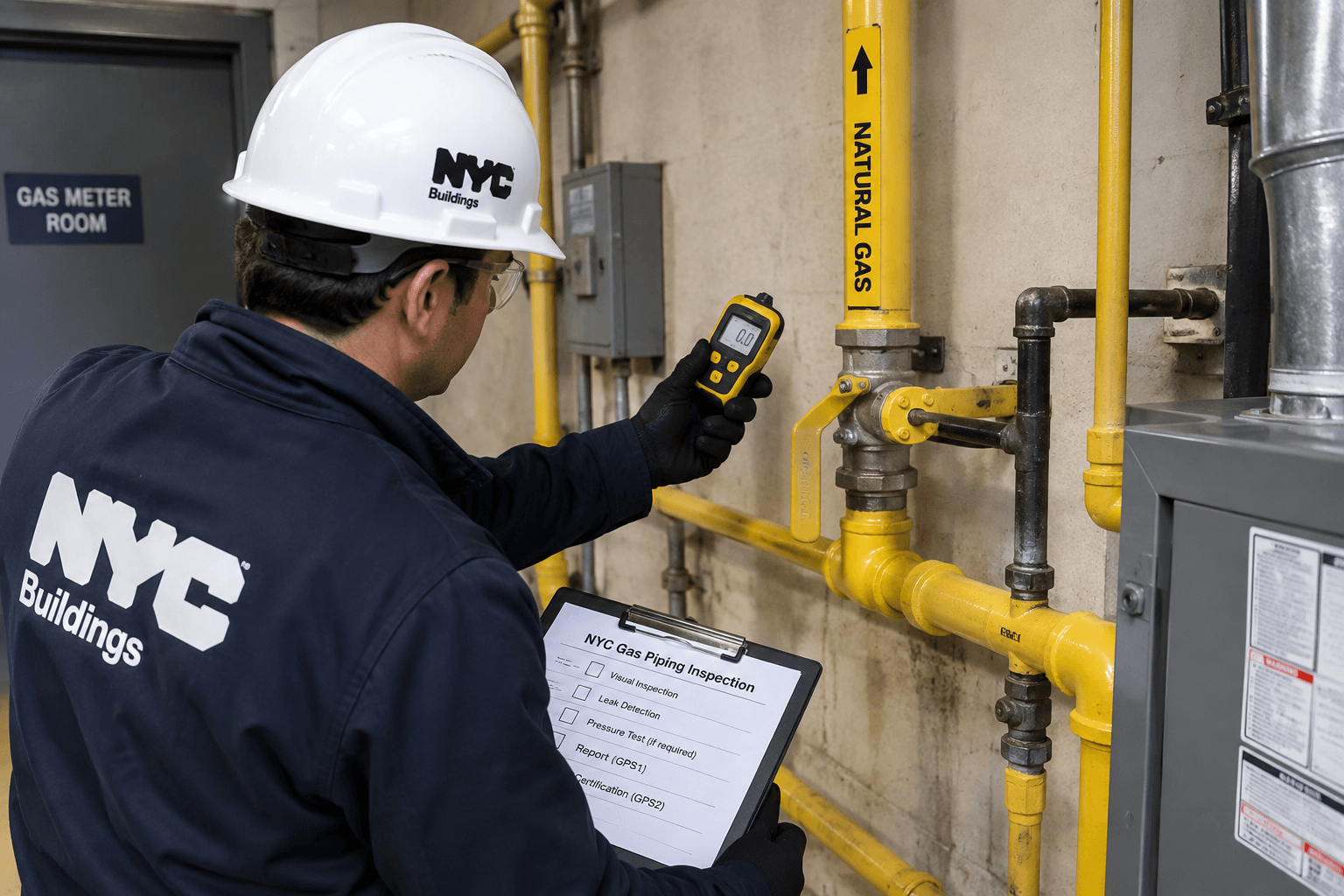
The inspection must be performed by a Licensed Master Plumber (LMP) or a qualified individual working under the required supervision of an LMP.
What Happens After the Inspection?
Following the inspection, the LMP provides the owner with a GPS1 Gas Piping System Periodic Inspection Report within 30 days. The owner must then submit the GPS2 Gas Piping System Periodic Inspection Certification to the NYC Department of Buildings within 60 days of the inspection.
If unsafe or non-code-compliant conditions are discovered, the property owner is responsible for making sure the required corrections are completed.
Why Property Owners Should Know Their Deadline
Missing a Local Law 152 deadline can lead to DOB enforcement and financial penalties. NYC DOB has already issued violations for failure to submit required GPS2 certifications for Cycle 2 properties.
Property owners and managers should check their building's Community District and Local Law 152 inspection cycle well before the deadline. Scheduling the inspection early can provide enough time to address problems and complete the required certification.
Staying ahead of your gas piping inspection schedule can help protect your building, your occupants, and your compliance record.