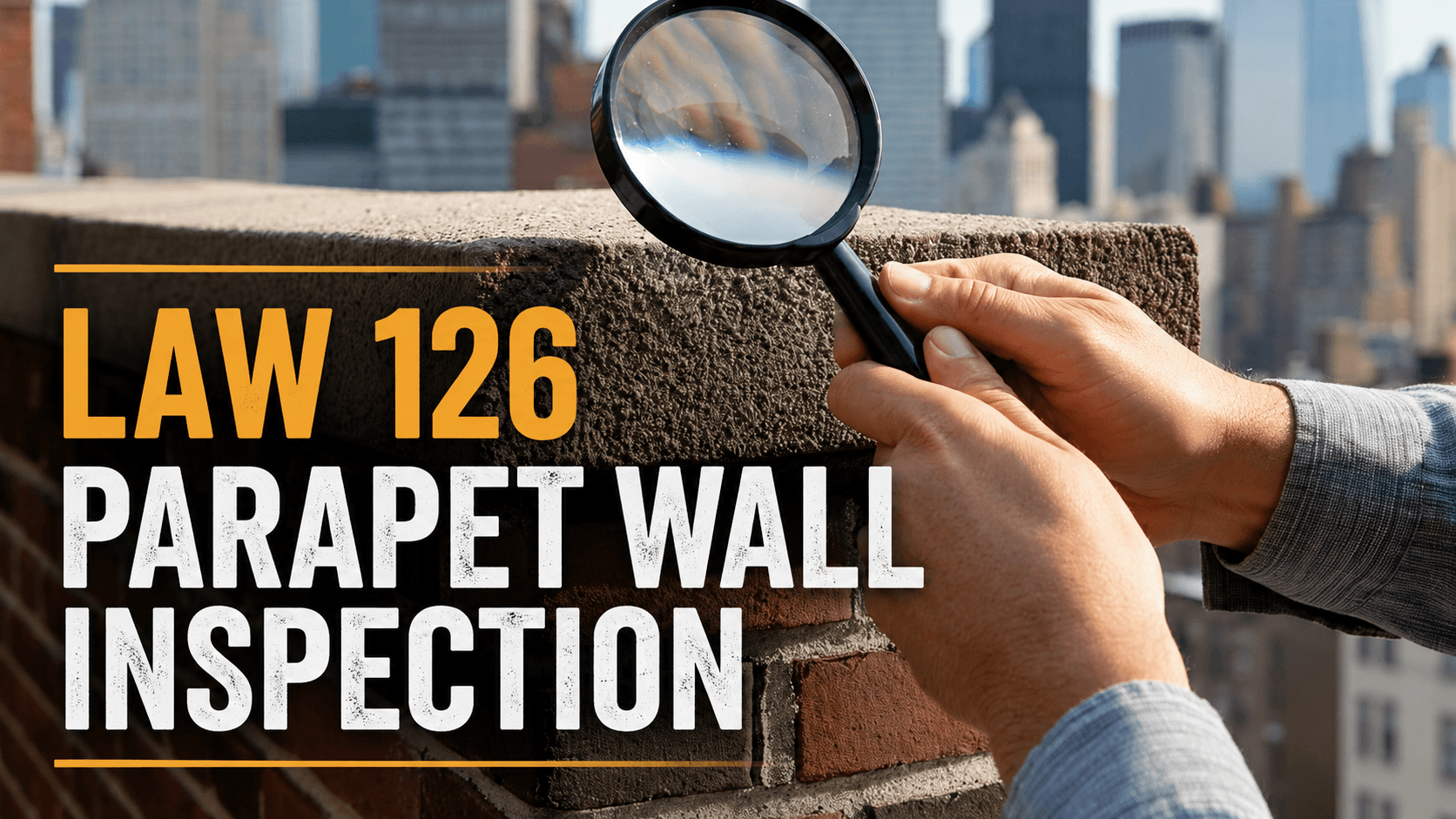
Parapet walls are an important part of building safety in New York City because they are exposed to harsh weather and are often located above sidewalks and other areas occupied by the public. Because deteriorated masonry or loose materials can create serious hazards, building owners need to understand their responsibilities for inspection, maintenance, and repair.
Why Parapet Wall Safety Matters
Over time, parapet walls can develop cracks, deteriorated mortar joints, loose bricks, leaning sections, or damaged coping. Water infiltration can make these conditions worse, particularly when moisture enters masonry and freezes during colder weather.
Regular inspections and maintenance help identify these problems before they become significant safety concerns.
Understanding Local Law 126
NYC Local Law 126 established requirements for periodic inspection of certain parapet walls. The law is designed to help identify unsafe conditions and ensure that necessary repairs are addressed.
For covered buildings, owners are responsible for having the parapet inspected by a qualified professional and ensuring that required reports are properly submitted. The inspection process generally involves evaluating visible conditions and identifying defects that could pose a danger.
Because requirements and filing schedules can depend on the building and inspection cycle, owners should confirm the applicable requirements with the NYC Department of Buildings (DOB) or a qualified professional.
What Inspectors May Look For
During a parapet assessment, professionals may examine the condition of:
- Brick and masonry units
- Mortar joints
- Coping stones and caps
- Flashing and waterproofing
- Cracks and displacement
- Loose or deteriorated materials
- Signs of water infiltration
- Leaning or bulging sections
- Conditions that could result in falling materials
Any potentially hazardous condition should be evaluated and addressed according to applicable building requirements.
Repairs and Follow-Up
If an inspection identifies unsafe or defective conditions, repairs may be required. Depending on the problem, work could include replacing damaged masonry, repointing mortar joints, repairing coping, correcting water infiltration, or securing loose materials.
Property owners should not delay necessary repairs. Deterioration can spread and become more expensive to correct, while unresolved unsafe conditions may lead to violations or other enforcement actions.
Keep Proper Documentation
Building owners should maintain inspection reports, repair records, photographs, permits, and other documentation related to parapet wall maintenance. Keeping organized records can make future inspections easier and help demonstrate that required work has been completed.
Stay Proactive With Parapet Wall Maintenance
Understanding NYC DOB requirements is only one part of maintaining a safe parapet. Property owners should also establish a routine maintenance program, monitor visible deterioration, keep drainage systems clear, and address problems promptly.
Taking a proactive approach can help reduce safety risks, prevent costly emergency repairs, and support compliance with NYC building requirements.