Introduction
In New York City, Local Law 31 of 2020 is a crucial regulation designed to protect tenants—especially young children—from the dangers of lead-based paint. The law mandates that property owners of buildings constructed before 1960 (and in some cases, before 1978) conduct lead paint inspections in units where children under 6 reside. Failing to comply with this law isn’t just negligent—it can result in serious violations, fines, and legal exposure.
If you’re a landlord in NYC, here’s what you need to know about the penalties for not complying with Local Law 31.
1. Civil Penalties and Fines
The NYC Department of Housing Preservation and Development (HPD) enforces Local Law 31. If a landlord fails to meet the inspection deadlines or submit proof of inspection by a certified lead inspector or risk assessor, HPD can impose civil penalties ranging from $250 to $10,000 per violation.
Repeat violations or failure to comply after receiving a notice can result in compounded fines and potential litigation.
2. HPD Violations (Class B and Class C)
Landlords who don’t comply can receive:
- Class B Violations: For failure to comply with inspection requirements. These must be corrected within 30 days, and proof must be submitted to HPD.
- Class C Violations: For the presence of lead-based paint hazards. These are considered immediately hazardous and come with higher penalties and tighter deadlines.
If lead hazards are found and not abated, HPD may perform emergency repairs and bill the landlord.
3. Tenant-Initiated Lawsuits
Tenants may sue landlords under the NYC Housing Maintenance Code or NY State laws if lead hazards are not addressed. The courts can award:
- Actual and punitive damages
- Injunctive relief (forcing compliance)
- Attorney’s fees and court costs
If a child is poisoned due to negligence, the financial and reputational consequences can be catastrophic.
4. DOB and DOHMH Referrals
Non-compliance may also lead to referrals to the Department of Buildings (DOB) and the Department of Health and Mental Hygiene (DOHMH), which can trigger additional inspections, building violations, or enforcement actions.
5. Impact on Building Sales, Refinancing, and Insurance
Properties with outstanding lead paint violations can face:
- Delays or denials in property sales or refinancing
- Higher insurance premiums or policy cancellations
- Red flags during due diligence for buyers or lenders
6. What Landlords Must Do Under Local Law 31
To stay compliant, landlords must:
- Hire an EPA-certified inspector or risk assessor (XRF testing required)
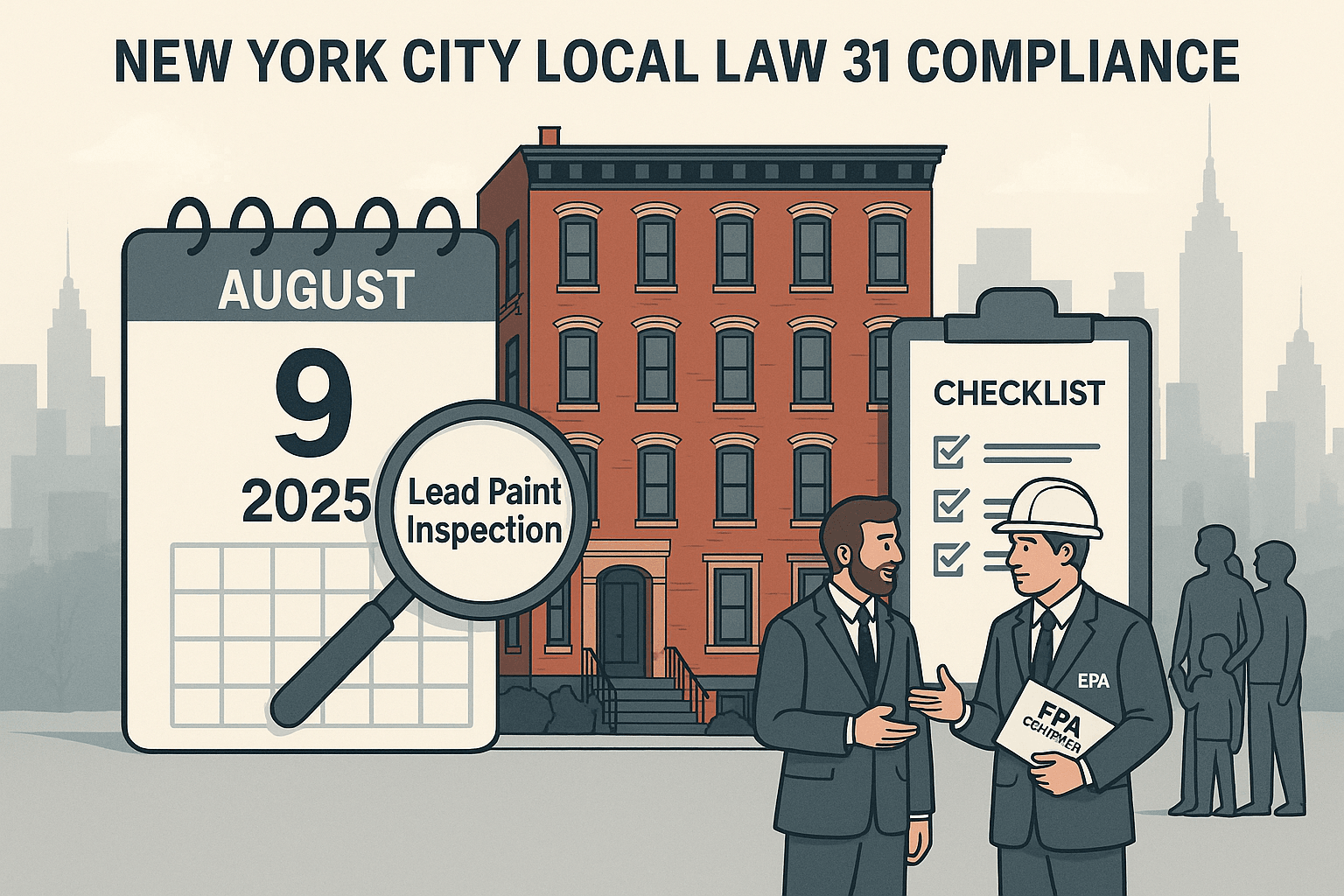
- Inspect all units in pre-1960 buildings by August 9, 2025
- Re-inspect upon a new tenancy if a child under 6 moves in
- Maintain records for at least 10 years and make them available to HPD upon request
Final Thoughts
Local Law 31 is not just a bureaucratic checkbox—it’s a life-saving regulation designed to prevent lead poisoning in children. As a landlord, staying in compliance protects your tenants, your building’s value, and your business from costly legal exposure.
Need Help?
At Environmental Safeguard Solutions, we offer EPA-certified lead inspections across NYC and New Jersey, helping landlords meet all LL31 requirements with speed, accuracy, and professionalism.
Contact us today to schedule a compliant XRF inspection and avoid costly violations.