The Origin of Local Law 31
In 2019, New York City passed Local Law 31, a major step toward eliminating childhood lead exposure in residential housing. The law built upon earlier regulations like Local Law 1 of 2004, which aimed to reduce lead hazards in homes with children under six.
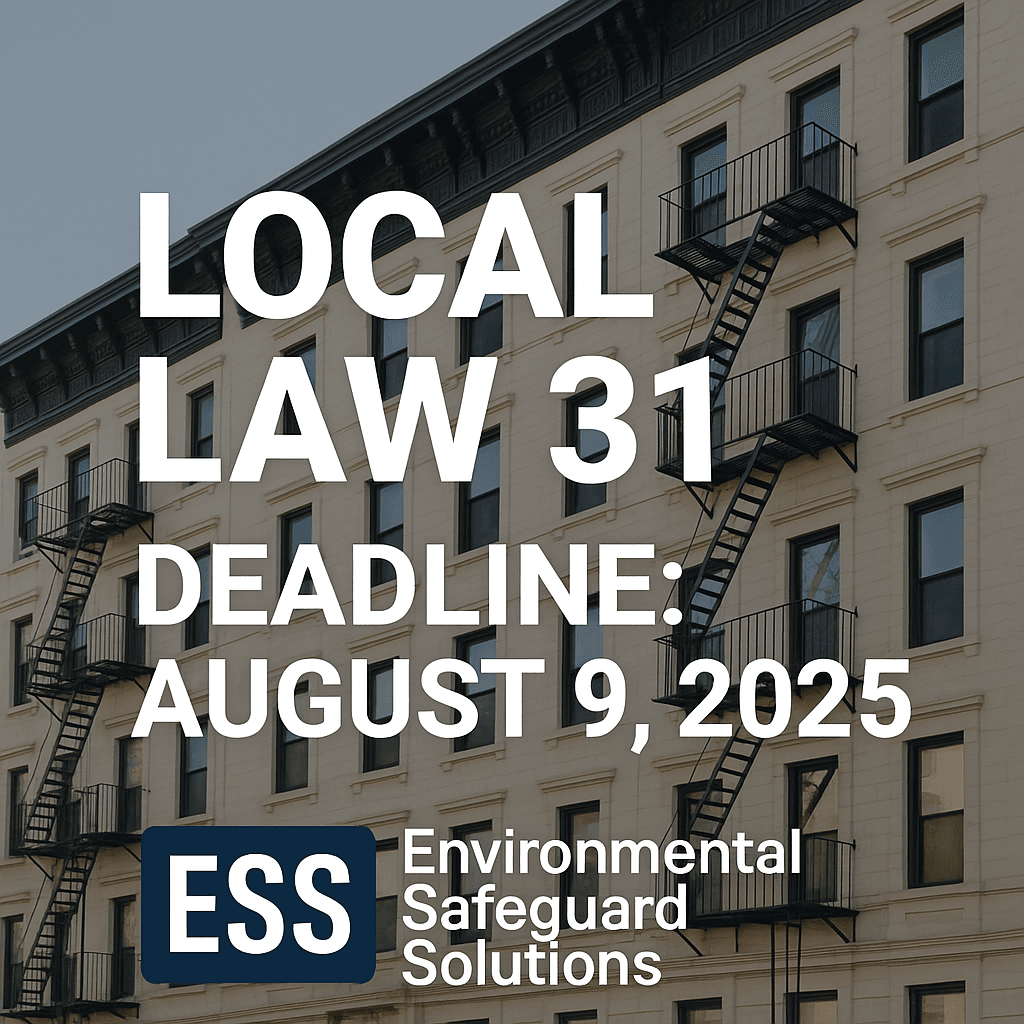
Local Law 31 strengthened those protections by requiring lead-based paint inspections by August 9, 2025, for every residential unit built before 1960—or those built between 1960 and 1978 where the owner suspects lead paint may be present.
This was more than just another housing rule; it represented NYC’s commitment to public health and housing safety.
What Local Law 31 Requires
Landlords and property owners must:
- Test all dwelling units for lead-based paint using an EPA-certified XRF inspector.
- Maintain documentation of all inspections and results for HPD (Housing Preservation & Development).
- Correct or abate lead hazards if XRF results show lead levels above 0.5 mg/cm² (HUD’s current threshold).
- File affidavits and certifications confirming compliance or lead-free status.
This law applies whether or not a child under six lives in the apartment—a major expansion from older lead laws.
Why Compliance is So Important
Failing to comply with Local Law 31 can result in:
- Severe HPD violations (Orders #616, 617, 624, etc.).
- Costly civil penalties and court action.
- Delays in sales, refinancing, or insurance renewals.
Beyond the legal risks, lead exposure poses serious health dangers—especially to children and pregnant women. Lead dust, invisible to the eye, can cause irreversible neurological and developmental harm.
By staying compliant, property owners not only protect themselves legally but also safeguard their tenants’ health and their property’s long-term value.
How Environmental Safeguard Solutions Can Help
At Environmental Safeguard Solutions (ESS), we specialize in Local Law 31 XRF Inspections and Post-Abatement Dust Clearance Testing throughout New York City, Long Island, Westchester, and New Jersey.
Our EPA-licensed inspectors use state-of-the-art Viken Pb200e XRF analyzers to test every component required by law—including walls, doors, windows, baseboards, and closets.
We provide:
- Comprehensive XRF inspection reports
- HPD-compliant affidavits and paperwork
- Post-abatement dust clearance testing
- Fast scheduling and same-week reporting
We’ve helped hundreds of landlords and management firms stay ahead of the August 9, 2025 deadline—ensuring compliance, safety, and peace of mind.
Don’t Wait Until the Deadline
The city has already begun increasing enforcement efforts. If your property hasn’t been tested yet, now is the time. Waiting until the last minute could mean inspection delays, backlogs, and potential penalties.
Contact Environmental Safeguard Solutions today to schedule your Local Law 31 inspection:
📞 (929-305-1232 | 🌐 www.ess-nyc.com